
The short answer
An NGO donation page should implement the contribution routes its compliance advisers approve, including eligibility, donor information and bank routing. Foreign-source contributions cannot be classified by currency alone. Design clear routes, confirmations and reconciliation around the organisation’s actual permissions before enabling online giving. This is a design framework, not legal advice.
What must be confirmed before design begins?
Ask the organisation's compliance advisers to confirm whether it may receive the proposed contributions and which conditions apply. FCRA registration or prior permission is relevant to eligible foreign contributions. Record the approved receiving account, donor classification rules and information requirements before selecting a payment implementation. The official FCRA FAQ explains that donor citizenship and source matter; an overseas address or a rupee payment alone does not settle classification. Keep legal conclusions with the advisers and make the design team responsible for implementing the agreed requirements accurately.
How should domestic and foreign giving be separated?
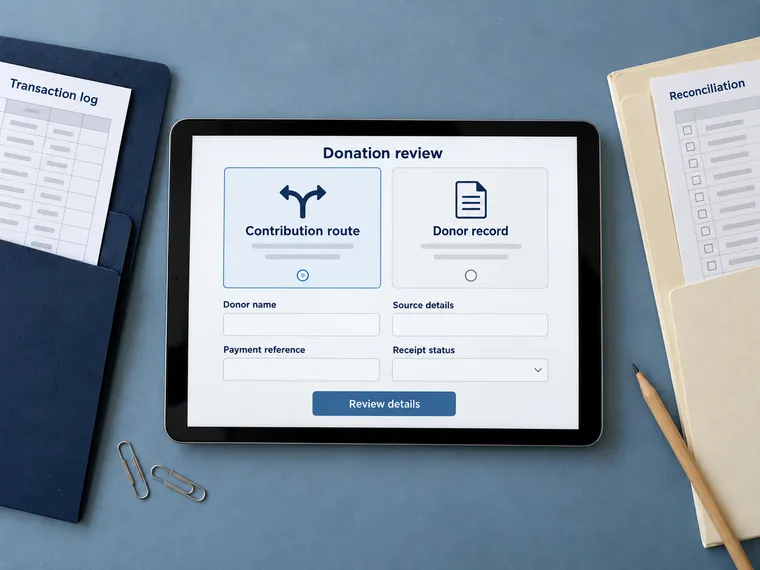
Use a clear initial choice and explain it in language a donor can understand, based on the approved classification rules. Do not automatically route someone solely from their location, currency or IP address. Identify what happens when a donor is unsure and provide a contact route rather than encouraging a guess. Keep the chosen route visible through the form and payment handoff. Verify the receiving account with the organisation. The official FAQ identifies the designated SBI New Delhi Main Branch account for receipt of eligible foreign contributions; setup must follow current approved arrangements.
What information should the form collect?
Use a field specification signed off by the organisation and its advisers. Separate information needed for classification and records from optional marketing preferences. Explain why a field is required and provide useful validation. Avoid collecting sensitive identity documents through an ordinary form without an approved need and secure process. Check that the payment provider can carry the necessary reference into the records used for reconciliation. The form should support the organisation's actual recordkeeping, rather than simply copying another NGO's fields and assuming they are sufficient.
What should donors see after payment?
Distinguish a payment confirmation from any additional receipt or tax documentation the organisation issues. Show the amount, status and reference information approved for that route, along with a contact method for a discrepancy. Do not claim a tax benefit without a verified basis. Test failed, pending and duplicate payments. If a payment is pending, explain what the donor should do rather than asking them to retry blindly. The wording and delivery process should match the accounting record, so staff can answer a donor's question without reconstructing events from screenshots.
How do you prevent routing and reconciliation mistakes?
Test each approved route with the relevant provider and receiving-account setup before making it available. Record the transaction identifier and the contribution route in the systems the organisation uses. Agree who checks unmatched transactions, missing confirmations and refund requests. Limit access to donor records and keep an appropriate audit trail. A successful button click does not prove the funds reached the intended account or that the record is complete. Include operational staff in acceptance testing, because they will handle exceptions after the build team leaves.
What should stay under review after launch?
Assign owners for the compliance instructions, payment configuration, donor communications and website content. Review the journey when permissions, providers or requirements change. Keep a documented way to disable an affected route while an issue is investigated. Check current official material rather than relying indefinitely on a build-time checklist. The page is one part of an operating process: eligibility review, receipt of funds, records and reporting need to remain aligned. A clear design supports that process but does not itself confer permission to receive contributions.
FAQ
Does a foreign currency mean a foreign contribution?
Currency alone is not the deciding factor. The source and applicable classification rules matter; have advisers define the correct decision process for the organisation.
Can one generic payment button handle every donation?
Only if the approved implementation correctly handles eligibility, routing and records. Do not enable a generic route before those requirements are confirmed and tested.
What should happen if a route has to be paused?
Keep a documented way to disable the affected route, show donors a clear message and an approved alternative where one exists, and record who made the change and why.